CO2 Regulators Explained: How They Keep Your Cocktail Keg Pouring Perfectly
Nothing ruins a party faster than a cocktail keg that sputters, foams, or refuses to pour at all. Most of the time, the real culprit isn't the drink recipe, it's the small metal part controlling the gas behind it. That part is called a regulator, and understanding how it works is the difference between a keg that pours perfectly all night and one that turns into a guessing game.

What Does a CO2 Regulator Actually Do?
A regulator is the device that controls how much gas flows from a CO2 (carbon dioxide) cartridge into your cocktail keg. Without it, gas would rush in all at once, over-pressurizing the keg and turning every pour into a foamy mess. The regulator steps that pressure down to a safe, steady level, measured in PSI (pounds per square inch), so your drink pours smoothly instead of exploding out of the tap.
Why Your Cocktail Keg Needs a Regulator, Not Just CO2
CO2 alone doesn't make a keg work; it needs to be controlled. A regulator connects to the CO2 source, attaches to the keg through a ball lock (a quick-connect fitting that locks the gas line securely in place), and manages pressure so carbonation stays consistent from the first pour to the last. This is also what keeps your batched cocktail fizzy instead of going flat halfway through the party.
Choosing the Right Regulator for Your Keg
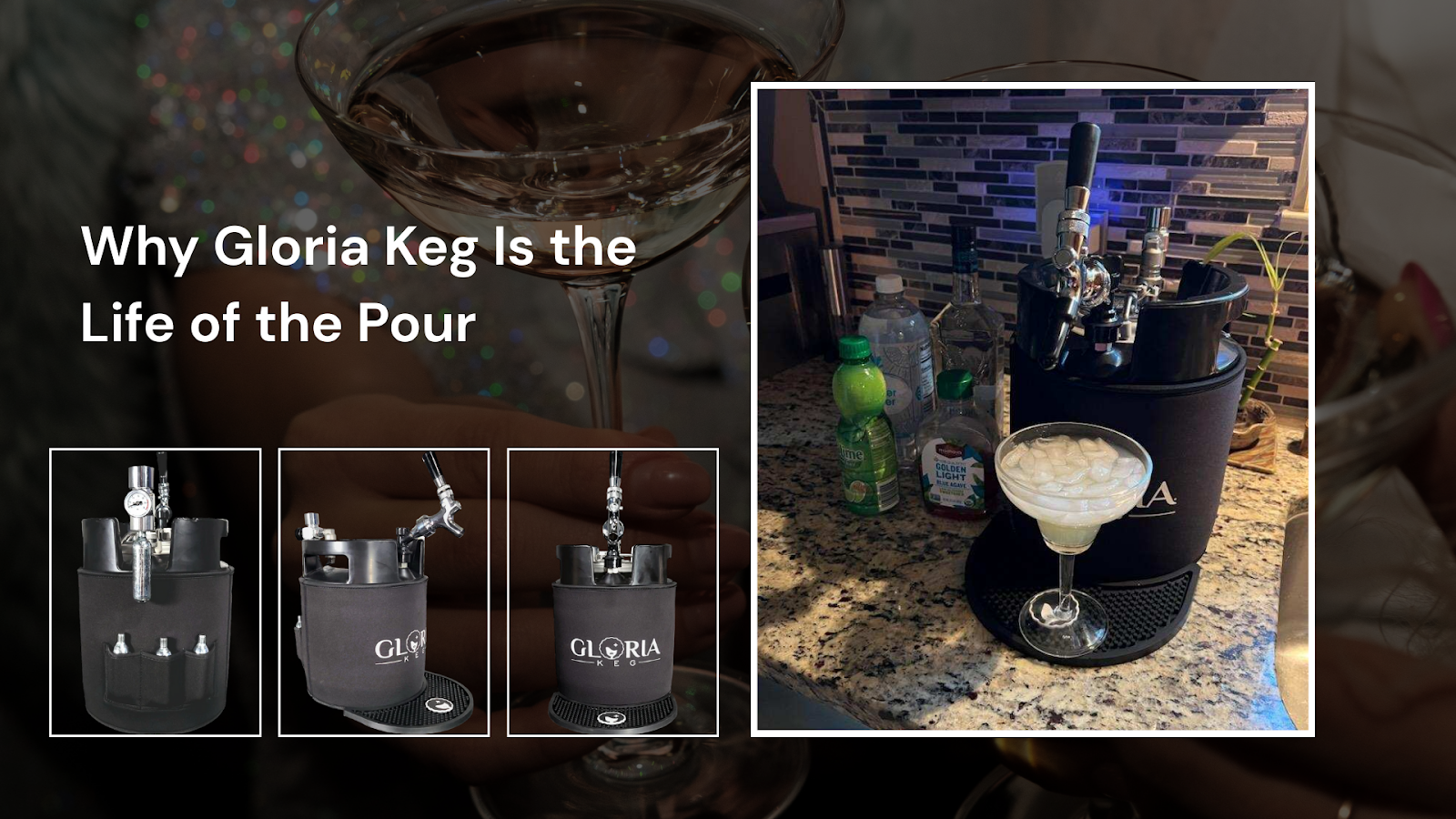
Gloria Keg offers two regulator options depending on how you power your keg. The Regulator Assembly 16 gram is built for small, disposable CO2 cartridges and is ideal for most standard parties using a Gloria (7L) keg. For bigger gatherings or a Gloria Big G (10L) keg, the Regulator Assembly 500 gram uses a larger cartridge that lasts longer between changes, which is helpful when you're serving a bigger crowd for several hours.
Signs Your Regulator Needs Attention
A few warning signs point to regulator issues rather than a bad recipe. If your drink pours out flat, the pressure may be too low. If it foams excessively or shoots out too fast, the pressure is likely too high. A hissing sound near the connection usually means a loose seal. Keeping a few 16-gram CO2 cartridges on hand also helps rule out whether the problem is an empty cartridge rather than the regulator itself.
Frequently Asked Questions
Q: What does a CO2 regulator do on a cocktail keg?
A: It controls how much gas pressure flows into the keg, keeping pours smooth and consistent instead of overly foamy or flat.
Q: Can I use any regulator with any keg?
A: No. The regulator must match your CO2 source size, a 16-gram regulator won't work with a 500-gram cartridge system, and vice versa.
Q: Why is my cocktail keg pouring too much foam?
A: Excess foam usually means the pressure is set too high or the regulator connection isn't sealed properly.
Q: How do I know when my CO2 cartridge is empty?
A: If the pour suddenly slows or stops entirely and the regulator shows no pressure, the cartridge likely needs replacing.
Q: Do I need a regulator if I already have CO2 cartridges?
A: Yes. The cartridge supplies the gas, but the regulator is what safely controls its pressure so your keg pours correctly.
Keep Every Pour Perfect with Gloria Keg
A cocktail keg is only as good as the regulator controlling it. Choosing the right size, watching for warning signs, and keeping spare cartridges on hand will keep your drinks pouring smoothly at every event.
Visit Gloria Keg to explore the full lineup of cocktail kegs and regulator accessories built to keep your next party running without a hitch.


Comments
Post a Comment